
How a PMax Pivot Grew a Specialty Agricultural Brand's Paid Search ROAS by 61%
Google Performance Max helped this specialty agricultural and pest control brand grow after a tough start. The brand launched paid ads with no history, no product feed, and no room for non-branded keyword traffic. Eyeful Media first built a short-term keyword strategy. Then, once the data was ready, the team moved into Shopping and Performance Max. That shift drove 37% ROAS growth and lifted total website revenue by 14%.
Key Takeaways
A specialty agricultural and pest control brand launched paid search with no past campaign data.
Eyeful Media could not target non-branded keyword traffic.
Early keyword campaigns helped bring in revenue while the product feed was being built.
Once the feed and data were ready, the team moved into Shopping and Performance Max.
The new strategy raised ROAS by 37% and total website revenue by 14%.
The Challenge: Launching Paid Ads Without History — or Brand Keywords
This specialty agricultural and pest control brand had to build paid search from the ground up. There was no past campaign data to use, and the team could not target non-branded search terms. That meant the first phase had to create useful data without wasting spend.
Starting From Scratch
The client launched paid advertising in August with very little past data to guide the plan. There was also one firm rule: capture zero non-branded traffic. Every dollar had to reach shoppers who already knew the brand, a manufacturer, or a specific product. At the same time, the product feed was not ready. That limited which campaign types the team could use at launch and made the first phase more careful by design.
Phase 1 — Keyword Strategy Buys Time
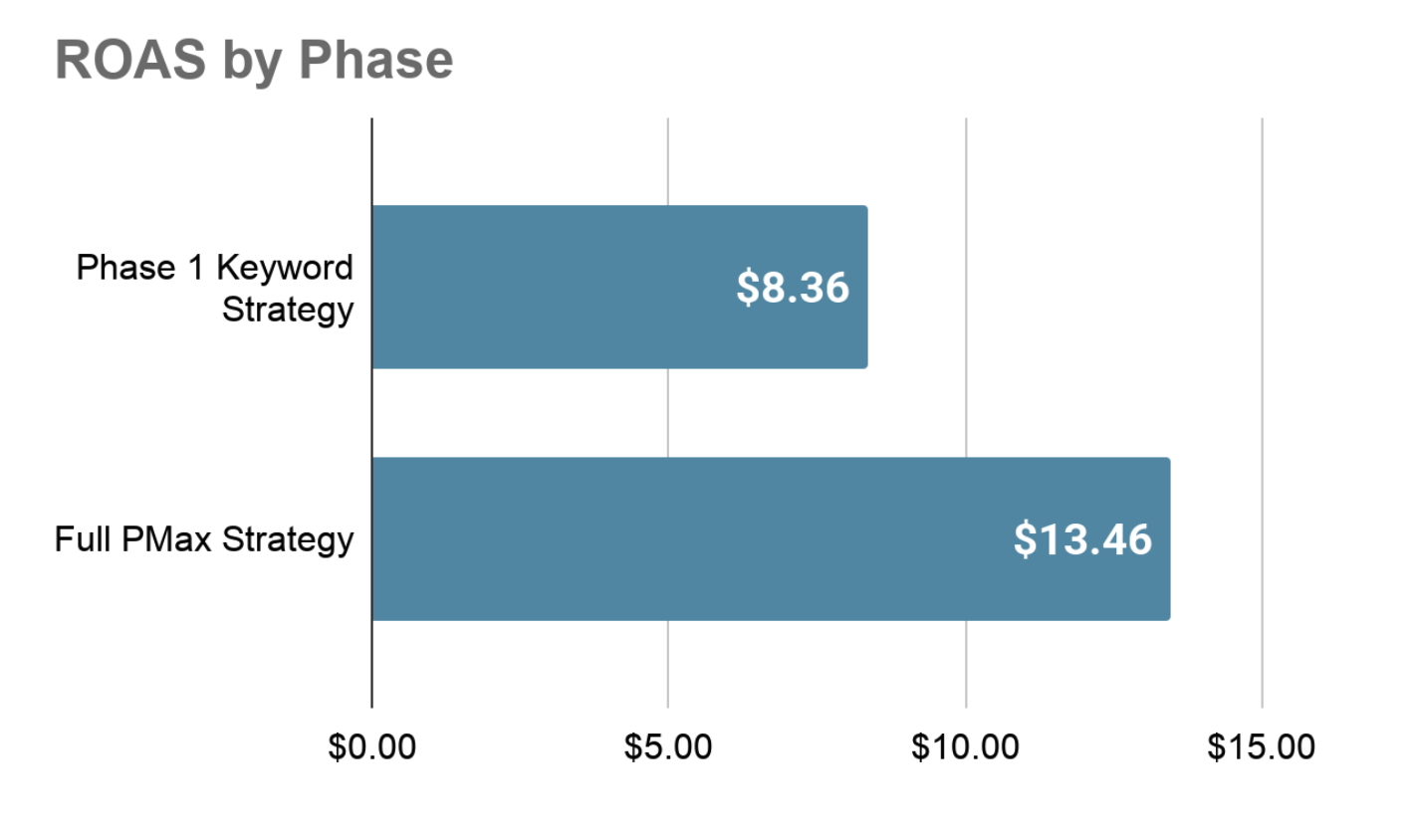
The first phase used keyword campaigns to reach shoppers who were already close to buying. Campaigns focused on manufacturer names, product titles, and a small set of light unbranded terms. The approach delivered a $8.36 ROAS, but it was never meant to be the final plan. It provided early revenue signals while the product feed came online. Once the feed was ready, the team could build a stronger Shopping and Performance Max strategy.
The Pivot: Going All-In on Shopping & Performance Max
After preparing the product feed and initial revenue data, Eyeful Media shifted from keyword campaigns. The next phase focused on Shopping and Performance Max. It used product-level data to guide spending. This gave the team a more scalable way to reach high-intent shoppers.
Bucketing SKUs by Performance
Once enough site data existed, Eyeful Media sorted SKUs into groups based on performance. A supplemental feed was not available for script automation. So, the team built the groups by reviewing site behavior data.
Each group had its own bid strategy. Products with stronger revenue potential could get more support. Products with weaker returns were kept from pulling budget away from better performers.
| Keyword-Only Strategy | PMax + Shopping Strategy | |
|---|---|---|
| ROAS | $8.36 | $13.46 |
| Revenue growth | Created early revenue signals | Drove 45% more revenue |
| Spend efficiency | Worked as a short-term bridge | Produced stronger returns on 6% more spend |
| Targeting control | Guided by manufacturer names, product titles, and tight keyword groups | Guided by SKU buckets, product data, and bidding strategy |
| Scalability | Limited once the feed was ready | Built to scale across the product catalog |
This made the Google Shopping management plan easier to manage and scale. It also helped the team match spend to each product’s margin and revenue potential. That product-level structure was significant. It was a major reason the Shopping and Performance Max strategy became more efficient.
The Seasonal Bucket
Eyeful Media also added a third bucket for seasonal demand. This bucket was updated monthly, so the team could track which product groups were gaining interest in the catalog.
That mattered for a business tied to weather and growing cycles. Pest control demand often rises in spring and summer. Fertilizer and soil products shift as planting needs change.
This seasonal layer helped the team move budget toward high-demand SKUs at the right time. It also kept the Google Shopping feed structure stable. The team could adjust spend without rebuilding the campaign setup each month.
The Results
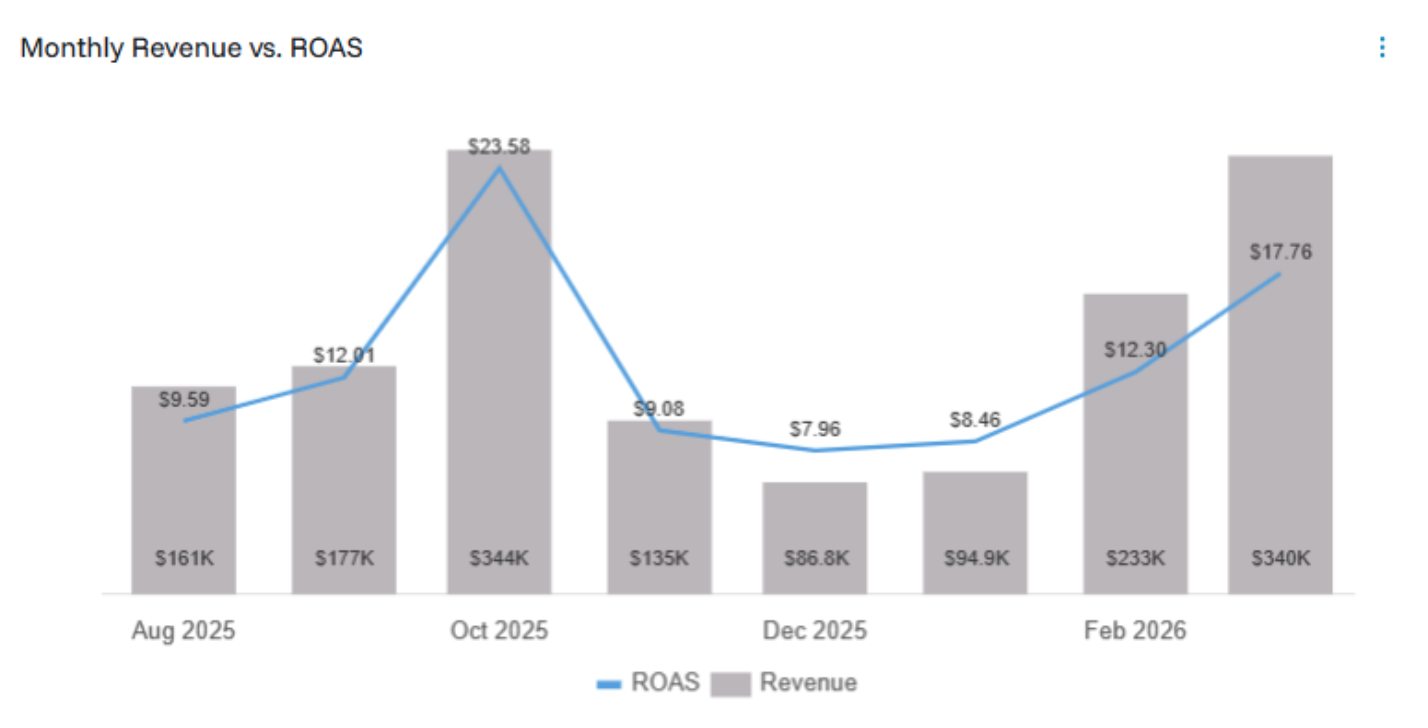
The full pivot raised ROAS to $13.46, up from $8.36 during the first keyword phase. That was a 37% period-over-period gain.
The strategy also improved revenue efficiency. Eyeful Media drove 45% more revenue with only 6% more spend. For the business, that led to a 14% lift in total website revenue in 2026.
The gains went beyond revenue. Unique customers increased by 40%, and 53% of ad-driven purchases came from people who had never bought from the brand before. The PMax strategy did more than improve return. It helped grow the customer base.
What Made This Strategy Work
Three choices made the difference. First, Eyeful Media waited for real data before moving fully into PMax. That kept the team from forcing automation too early.
Second, the team used SKU buckets instead of treating every product the same. Each group had its own role, budget, and bid strategy.
Third, the seasonal bucket gave the plan room to change. Spend could shift as pest control, fertilizer, and soil demand changed throughout the year.
Together, these choices helped the Google Shopping agency build a disciplined strategy. It also proved the team could improve ROAS without capturing non-branded search traffic.
Build for the Data You Have Now
The strongest paid strategy is not always the most advanced one. It is the one that fits the data, tools, and limits in front of you.
Eyeful Media did not force Performance Max before the account was ready. The team built a short-term plan first, then created a stronger structure for future growth. That approach helped the client perform now while building toward what came next.
Ready to put your product catalog to work? Talk to our paid search team.
Frequently Asked Questions
-
A Performance Max campaign is a Google Ads campaign built around a conversion goal. It can show ads across Google channels from one campaign. That can include Search, Shopping, YouTube, Display, Discover, Gmail, and Maps. It uses Google AI to help find likely customers, but the strategy still matters. Strong goals, clean product data, and smart campaign structure help it work better.
-
Use brand exclusions to keep Performance Max from serving on specific brand searches. This can include your own brand or a competitor’s brand. You can also use negative keywords for more control on Search and Shopping. For Eyeful Media, the right setup depends on how brand traffic is managed across the full account.
-
Performance Max starts with your goals. It also uses your product feed, creative assets, audience signals, and bid settings. Google AI then looks for people likely to convert across Google’s channels. But the campaign still needs a strong strategy. In this case, Eyeful Media waited for better data, grouped SKUs by performance, and used seasonal buckets to guide spend.ion text goes here