
AI Overviews Are Up 104% for B2C Brands: What This Means for E-Commerce [Report]
Across Eyeful Media’s portfolio of B2C brands, we’re seeing a sharp increase in AI Overview positions earned by our e-commerce clients.
AI Overview rankings across our B2C clients have surged 104% from December to April. This growth isn’t isolated—it’s happening across multiple industries and signals a broader shift in e-commerce search visibility.
To put this into perspective, Search Engine Land reported that Google’s AI Overviews surged early in 2025, then pulled back at the end of the year. Coverage grew from 6.5% of queries in January to nearly 25% in July, before declining to under 16% by November.
What we’re seeing now in 2026 is a renewed expansion that appears more sustained. A 104% increase across e-commerce brands suggests AI Overviews are not just returning, but becoming a more consistent part of the search experience. This growth suggests AI-generated answers are becoming a more permanent part of the product discovery journey.
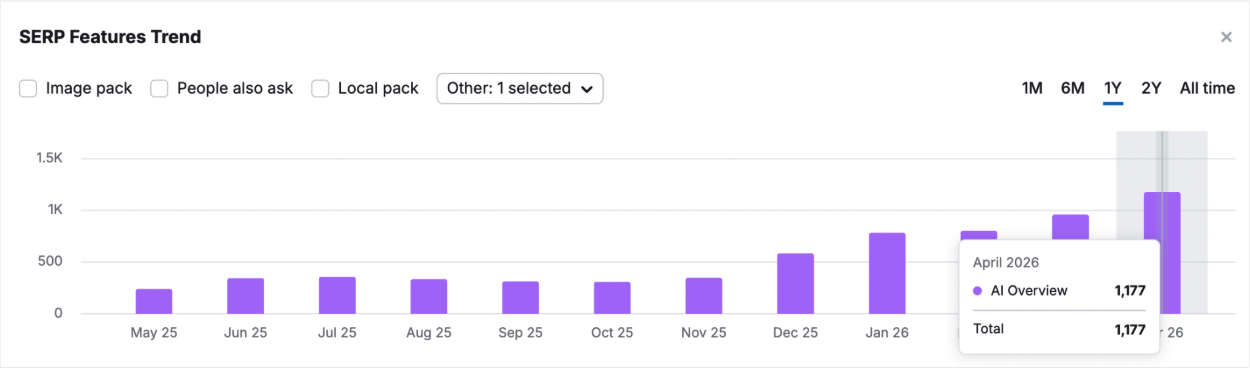
This analysis is based on aggregated SEMrush AI Overview data across a sample of Eyeful Media’s B2C clients.
What B2C Brands Should Do Now to Earn More AI Overview Visibility
As agentic commerce continues to emerge—creating pathways for users to discover and evaluate products without ever clicking through to a website—earning top AI positions will only become more critical for B2C brands.
Platforms like ChatGPT, Perplexity, Claude, and Gemini increasingly rely on top-ranking search content to generate answers, amplifying the importance of visibility in these positions.
Below are the SEO agency best practices e-commerce brands should prioritize now in order to maximize visibility and growth in this AIO search landscape.
1. Focus on decision-stage content, not just discovery
AI rankings prioritize content that helps users make decisions.
For e-commerce brands, that means investing in:
Product comparisons
“Best for” and use-case content
Pricing and value explanations
FAQs that address real customer objections
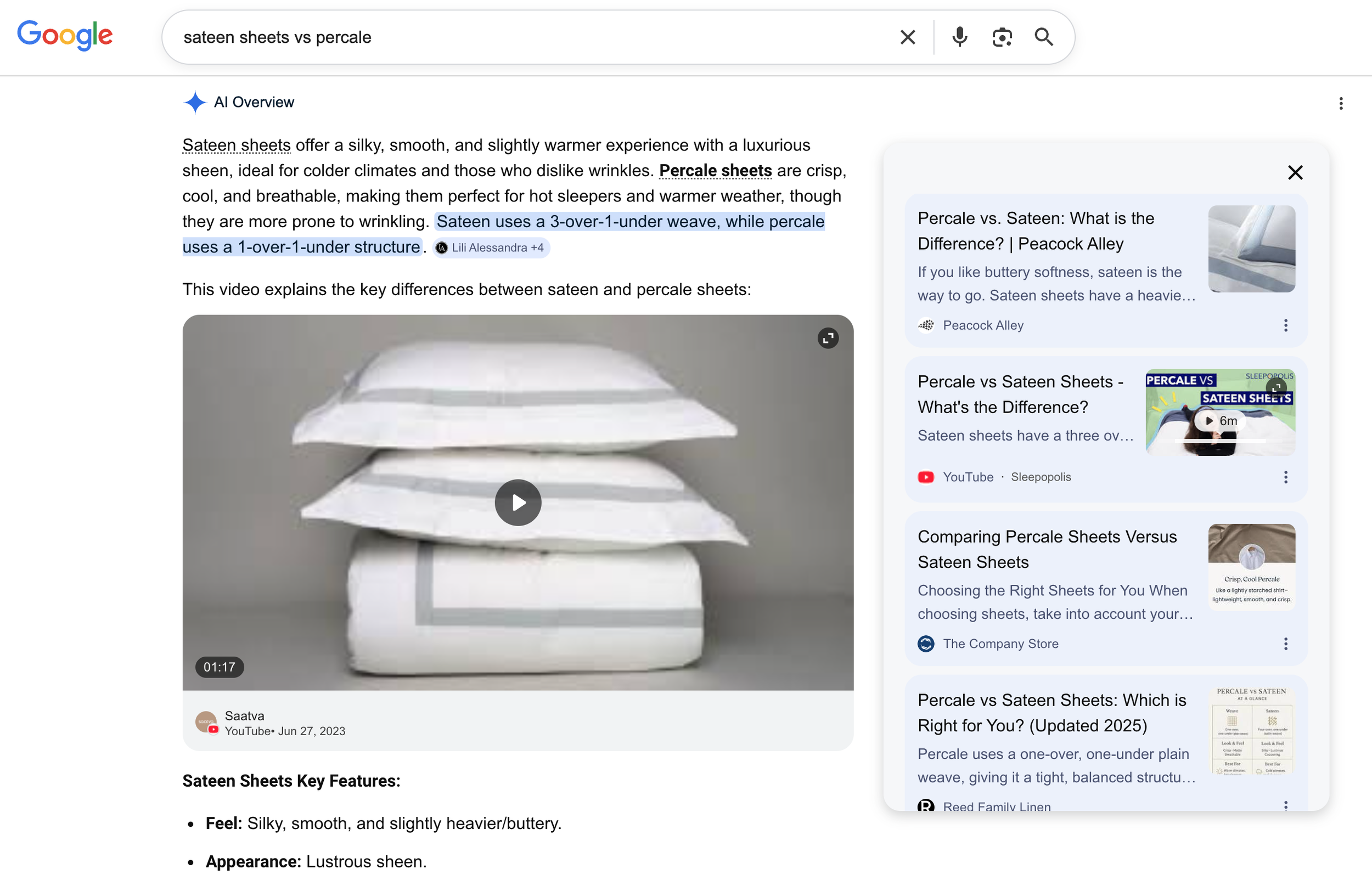
For example, a home goods brand may earn more AI visibility with content like “Which Sheets Are Best for Hot Sleepers?” than with a generic category page. Your reviews, support tickets, and return data are some of your most valuable inputs. They highlight where customers hesitate—and where your content should provide clarity.
If your content helps customers choose with confidence, it’s far more likely to be surfaced.
2. Make your content clear and easy to navigate
Clarity matters more than ever.
High-performing content is structured in a way that’s easy to follow and quick to understand:
Answer questions directly
Use clear, descriptive headings
Summarize key points upfront
Schema markup continues to play an important role by reinforcing context and helping search engines connect your content to relevant queries.
The goal is to create helpful content and make it easy to find.
3. Invest in original insights and first-party data
Most content repeats what already exists. That’s exactly what AI tools are designed to summarize. What stands out is original insight.
For B2C brands, this can include:
Customer behavior trends
Product performance data
Category benchmarks
Experience-driven product education
When your content offers something unique, it becomes a source—not just another option. That’s what earns visibility in AI-generated answers.
4. Strengthen your technical and content foundation
AI visibility is built on the same foundation as strong SEO.
Make sure your site:
Loads quickly and performs well on mobile
Uses clear internal linking between related topics
Avoids duplicate or thin content
Implements structured data to reinforce meaning
These fundamentals directly impact how your content is discovered, understood, and surfaced.
5. Start tracking AI visibility as a core metric
Visibility is no longer limited to rankings and traffic.
B2C brands should begin measuring:
Where they appear in AI-generated answers
Which content is cited most frequently
How AI-driven traffic engages and converts
This is still evolving, but early insights matter. Brands that start measuring now will be better positioned to adapt as this channel grows.
The Bigger Shift
AI Overviews aren’t just another feature—they’re reshaping how customers find and evaluate brands. We have moved from a list of links to curated answers.
This shift raises the bar. Content needs to be clearer, more useful, and more trustworthy to earn visibility.
The opportunity isn’t to reinvent your strategy. It’s to deliver valuable content and insights your customers need during the evaluation stage of their buying journey. Brands that move early will be better positioned as AI search continues to expand.
FAQs
-
AI Overviews are summarized answers at the top of search results. These answers are being cited not only on Google but also in AI platforms like ChatGPT, Perplexity, and others. If you’re not earning top AIO rankings, customers will not find you during their buying journey.
-
Focus on decision-driven content: comparisons, use cases, pricing, and real FAQs. Structure it clearly with direct answers and strong headings. Then layer in original insights, such as customer data or trends. Clarity + unique value wins.
-
Rankings aren’t enough anymore. Track where you’re cited in AI answers, which content gets pulled in, and how that traffic performs. Visibility now means being part of the answer—not just the results page.