
The Future of Visibility in the AI Era Isn’t Scaling Content. It’s Scaling Trust.
The internet has entered a new era of infinite content.
Today, anyone can generate hundreds of articles in minutes. AI can summarize information instantly. Search engines are evolving into answer engines. And customers are increasingly discovering brands through AI-generated recommendations instead of traditional search results.
This shift is fundamentally reshaping the website sales journey. Search Engine Journal reported that Google AI Overviews have reduced organic clicks by 38% and that zero-click searches rose from 54% to 72% when AI Overviews were shown.
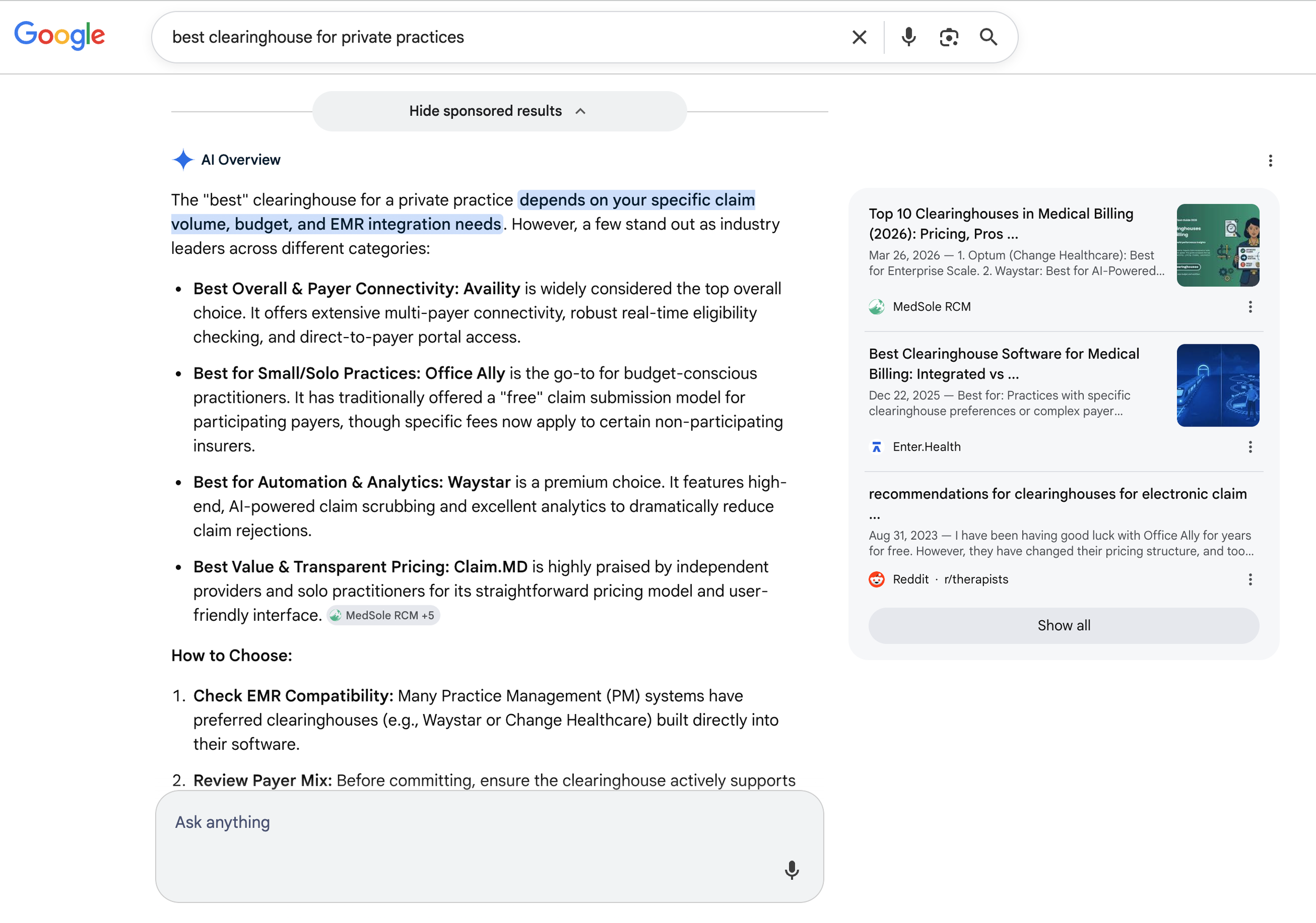
For years, content marketing was fueled in part by driving clicks at the awareness level. Publish more content. Target more keywords. Answer more top-of-funnel questions. Capture more traffic and nurture those visitors into inbound leads.
But AI has fundamentally changed the economics of information. Awareness content is now abundant, automated, and increasingly interchangeable. As a result, brands must invest more deeply in expert-led, trust-building content that helps customers evaluate options, solve real problems, and feel confident in their purchases.
AI Didn’t Kill Content. It Killed Average Content.
One of the biggest misconceptions about AI is that it will replace content marketing altogether. In reality, AI is not eliminating the need for content. It is eliminating the value of average content.
The internet is already flooded with:
Generic SEO articles
Surface-level thought leadership
AI-generated summaries
Repetitive social posts
Commodity-level educational content
Most of it says the same thing.
And increasingly, AI search platforms can answer many awareness-stage questions directly inside search results without users ever visiting a website.
What is SEO?
What is content marketing?
What is AI search?
These types of awareness queries are now summarized instantly by AI overviews, assistants, and conversational search experiences.
That means the brands that are still creating the content that AI can generate are becoming invisible. The businesses that continue prioritizing publishing volume over originality, expertise, and human connection will see diminishing returns.
Google's own AI optimization guide, released on May 15, is direct: don't create content that could easily be produced by a generative AI model. Instead, Google advises brands to lead with a unique point of view, first-hand experience, and in-depth knowledge—content that goes beyond what is already available elsewhere.
Their guidance draws a clear line between commodity content, which adds little unique insight for readers, and non-commodity content that brings expert perspective and real-world experience that AI cannot replicate. According to Google, creating that type of content will influence AI search visibility "more than any of the other suggestions" in their guide.
The content that wins will be sourced from human experience, perspective, and emotional resonance—the qualities that build trust.
We Have Entered a Trust Recession
The shift toward AI-generated content is happening alongside another important cultural reality: consumers are becoming more skeptical.
People are overwhelmed by:
AI content
Synthetic media
AI hallucinations
Misinformation
Information fatigue
This overload has led marketing into a trust recession. According to Edelman’s 2025 Trust Barometer, nearly 70% of consumers worry that misinformation and false content are increasingly being used to intentionally mislead the public.
Audiences no longer trust polished messaging alone. They trust brands that feel clear, credible, useful, and consistent over time. They trust businesses that demonstrate expertise rather than simply claim it.
Customers are loyal to brands that help them make informed decisions rather than aggressively push transactions. This is why human-centered content is becoming more important — not less — in the AI era.
As artificial content becomes infinite, authenticity becomes scarce. And scarcity creates value.
The Shift From Traffic to Trust
For years, SEO strategies largely focused on visibility through scale:
Publish more content
Answer more questions
Rank for more keywords
Capture more traffic
But AI is forcing a strategic reset for content marketers. The future of visibility is not about scaling information and traffic. It is about scaling trust.
That means the role of content is changing. Instead of simply attracting visitors, modern content must help people evaluate, validate, and feel confident in their decisions.
Customers are no longer just searching for answers. They are searching for reassurance.
They want confidence that a product will work. Confidence that a company understands the problem they are trying to solve. Confidence that they are making the right buying decision.
The brands that provide that confidence will earn disproportionate visibility in AI-driven discovery systems.
The shift is already showing up in real-world data. Across Eyeful Media’s B2C clients, for example, AI Overview rankings have already surged 104% this year, signaling the need to shift content strategy to evaluation- and decision-oriented experiences now.
The New Content Value Pyramid
As AI lowers the barrier to creating content, the hierarchy of valuable content becomes clearer. The brands that win will be the ones that move up the pyramid—away from content anyone can generate and toward content only they can create. This includes:
Evaluation Content — Decision-stage content that helps customers compare options, assess risk, and move toward action.
Inspirational Content — Storytelling, emotional connection, and content people remember long after they consume it.
Expert Insights — Original thinking, practitioner knowledge, lived experience, and perspective shaped by real-world outcomes.
Awareness content, or the information anyone can generate using AI, is increasingly commoditized and no longer worth publishing.
Why Evaluation-Stage Content Matters More Than Ever
One of the biggest opportunities today is not creating more awareness content. It is creating better and more helpful evaluation-stage content.
This is the content that closes the gap between awareness and action. It is also precisely the type of content that AI search systems are increasingly citing, as it matches how people actually make decisions.
For B2B brands, evaluation content includes:
Product comparisons
Pricing explainers
ROI discussions
Implementation guides
Webinar content
Customer demos
Expert-led industry education
These formats work because they address the questions, objections, and comparisons that buyers are seeking when they are close to a decision.
For B2C brands, evaluation content includes:
Expert buying guides
Product reviews
Use-case education
Customer experiences
Long-term value comparisons
Educational video content
For consumer brands, this content succeeds because it reduces purchase anxiety. AI search results tend to cite content that answers "is this worth it" while answering the "what is this" queries themselves.
That is why trust-focused content strategies are outperforming traditional high-volume publishing models in terms of leads and sales. At Eyeful Media, we are already seeing a measurable impact of evaluation-stage content on AI search visibility.
In 2026, AI traffic referred from large language models—including ChatGPT, Gemini, Claude, and Perplexity—increased 190% across our portfolio of B2B clients compared to the same period last year, driven by scaling this mid-funnel content.
While AI citations still drive a relatively small share of total website traffic, their impact on business outcomes is disproportionately high. This AI referral traffic has influenced website conversion events at a rate 534% higher than the average across all website channels.
Authentic Content Is a Competitive Advantage
The data makes the strategic direction clear. But data alone doesn't build trust—humanity does. Modern brands must become memorable. They must create experiences and narratives that people associate with confidence, relevance, and belief.
This is where emotional connection becomes a strategic advantage. People remember brands that make them feel understood.
AI will absolutely transform workflows. Smart companies should use AI to improve efficiency, organize information, accelerate production, and support creativity. But AI should amplify human expertise—not replace it.
AI can summarize information, but it cannot replicate lived experience, emotional intelligence, or real human meaning. And as information becomes infinite, meaning becomes premium.
The brands that win the next era of search and discovery will not simply be the brands publishing the most content. They will be the brands earning the most trust.
That trust is built the same way it has always been built—through expertise that proves itself, stories that resonate, and experiences that make people feel understood rather than marketed to. The channels are new. The algorithm is new. The fundamental human need for confidence and credibility is not.
AI will shape how people discover brands. But humans still decide what deserves trust. In a world flooded with artificial content, the brands that feel most human won't just stand out. They'll win.